Experts say the 2021 Melamchi–Helambu floods were not merely seasonal disasters but clear evidence of climate change impacts. With losses exceeding Rs 87 billion, Nepal is being urged to present the catastrophe as a scientifically backed case to seek support from the international Loss and Damage Fund and strengthen its claim for climate justice.
Nepal Verified News
Tue Jan 27 2026
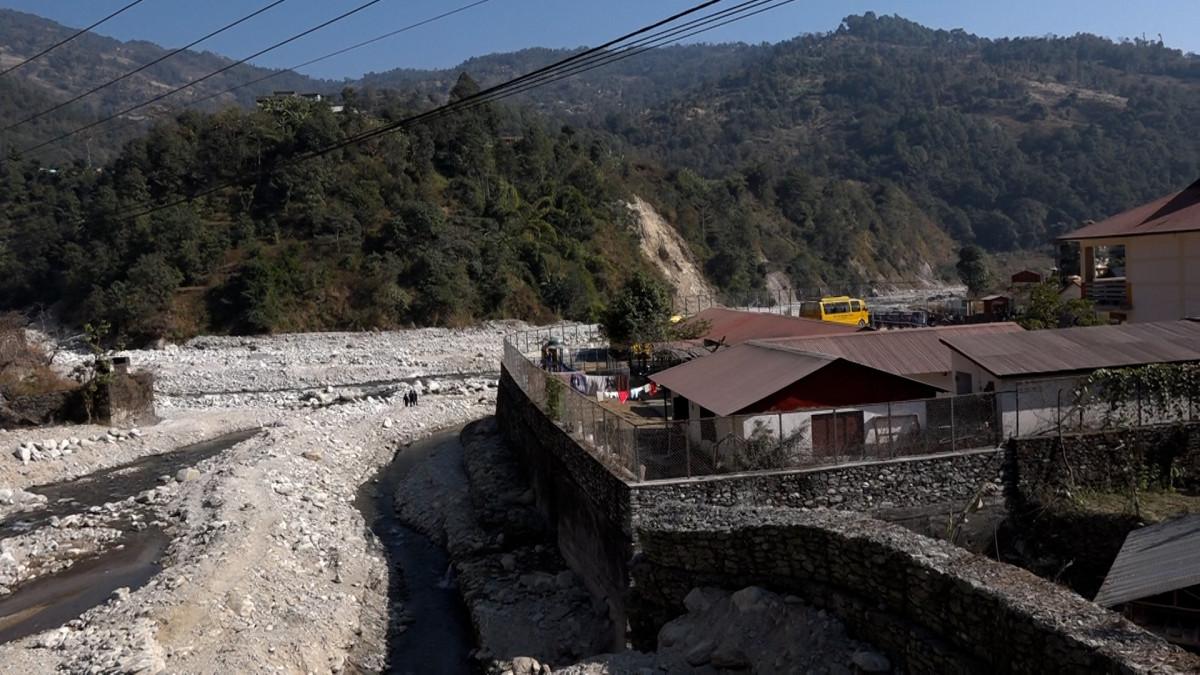
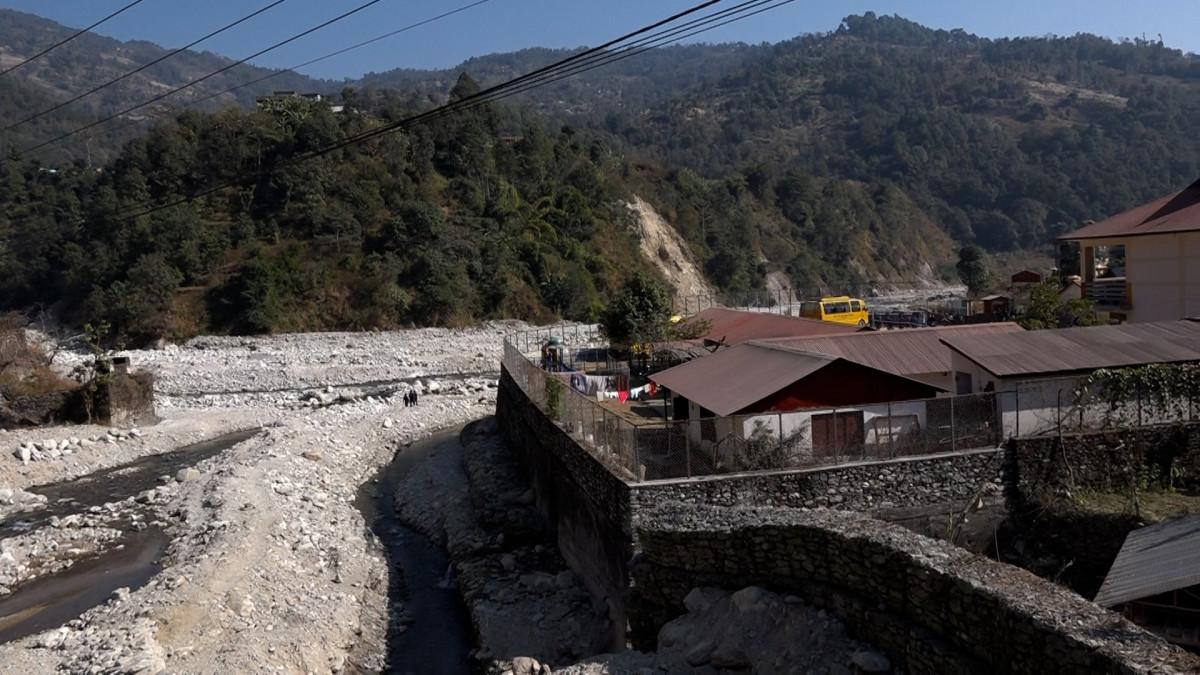
The devastating floods that struck Melamchi and Helambu in Sindhupalchok in 2021 were not merely seasonal disasters but a grim warning of climate change, experts say. Originating in the high Himalayan region and wreaking havoc downstream, the catastrophe is now being identified as a strong potential case for Nepal to seek international assistance from the recently established Loss and Damage Fund (FRLD).
As the fund has begun calling for proposals, climate experts argue that if Nepal can present the Melamchi disaster in a scientific and evidence-based manner, it could mark a major breakthrough in the country’s fight for climate justice.
Melamchi has become a living laboratory for understanding climate-induced disasters. According to climate expert Dr Arun Bhakta Shrestha, the flood represents a classic case of a “cascading hazard,” where one event triggers a chain of disasters, amplifying overall damage.
“Compared to other disasters, it is easier to demonstrate the direct contribution of climate change in high-Himalayan-origin events like Melamchi,” Dr Shrestha said. “There is clear, traceable evidence.”
This scientific assessment is reinforced by local experience. Nima Gyaljen Lama, Chairperson of Helambu Rural Municipality, highlighted how climate change has deeply affected the local economy.
“Helambu apples were once globally recognised. Now they are devastated,” Lama said. “Areas that were once cold are becoming warmer due to climate change.”
He stressed that the flood cannot be dismissed as a seasonal event, as it raises serious questions about Nepal’s development model itself. “The source of the Melamchi drinking water project lies here. The flood buried the source. We took loans from the ADB,” Lama said. “Climate change caused the disaster, but we are the ones repaying the debt.”
Research findings reflect the severity of local suffering. Studies estimate that Melamchi Municipality and Helambu Rural Municipality alone suffered economic losses of USD 640.56 million, equivalent to over Rs 87 billion.
Of this, approximately Rs 59.3 billion in damage occurred in Melamchi, while Rs 27.82 billion was recorded in Helambu.
At the household level, the situation is even more alarming. On average, each affected household lost property worth USD 52,113 (around Rs 7 million), while the relief received by victims remained negligible.
Climate expert Dr Basanta Adhikari stressed that these figures should be presented internationally as a case study. “We must first list both economic and non-economic losses,” he said. “If carbon emissions we didn’t produce can cause such devastation in a small basin like Melamchi, this should be taken forward as a global case study.”
While physical infrastructure can be rebuilt, the psychological scars left by the flood are far harder to heal. Citing a study by the Natural Resources Center, researcher Sneha Rai noted that 85 percent of affected residents in Melamchi and Helambu are suffering from psychosocial problems.
“Our research shows massive cultural and psychosocial impacts in these areas,” Rai said. “Tangible and intangible cultural heritage are interconnected, and their loss has deep and complex consequences. These dimensions must be included in any proposal.”
Although damage assessments exist, translating them into a successful claim under the Loss and Damage Fund remains technically challenging. Dr Maheshwor Dhakal, Head of the Climate Change Management Division at the Ministry of Forests and Environment, described Melamchi as a “potential candidate” for fund support.
“Submitting a proposal is essential, but we need a strong database and the capacity to demonstrate changes over time,” Dr Dhakal said. “An accredited entity must take Melamchi forward as a core issue.”
Climate finance expert Raju Pandit Chhetri pointed to the need for policy reform to overcome resource constraints. “We must link the Melamchi flood directly to loss and damage mechanisms to mobilise resources,” he said. “In the absence of sufficient funding, multi-dimensional efforts become necessary.”
Meanwhile, climate policy expert Hemant Ojha urged a smart and selective strategy, cautioning against weakening Nepal’s claim by overloading it.
“Not all losses should be pushed under the loss and damage framework,” Ojha said. “Only those that cannot be addressed through other mechanisms should be properly documented and quantified. This is what will make Nepal’s claim strong and competitive.”
The Melamchi flood is not just a story of disaster, it represents a critical opportunity for Nepal to seek climate justice. If the country can combine scientific evidence, detailed data, and human narratives into a compelling proposal, the Rs 87 billion compensation claim could become a historic test case for the effectiveness of the global Loss and Damage Fund.
No comments yet