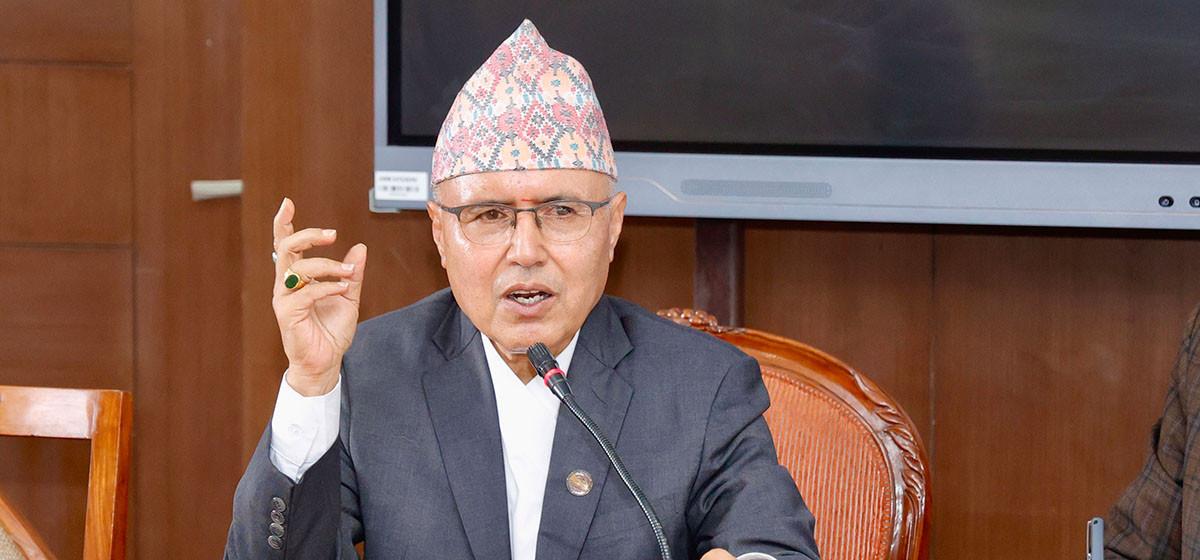
RSP MP Dr. Tosima Karki said the upcoming government will prioritize revising Nepal’s 47-year-old Drugs Act to ensure affordable and quality medicines for citizens.
Nepal Verified News
Tue Mar 10 2026

Dr. Tosima Karki, the Member of Parliament elected from Lalitpur Constituency No. 3 representing the Rastriya Swatantra Party (RSP), has expressed confidence that the upcoming government will prioritize necessary amendments to the decades-old Drugs Act.
Speaking at an interaction program titled “Nepal Pharm Expo and Self-Reliance in Medicines: Policy Issues” held in Kathmandu on Tuesday, she said it is not possible to provide modern and time-relevant medical services while relying on a 47-year-old Drugs Act. She assured that the new government will make the required amendments.
She said, “The government cannot guarantee that today’s modern and time-appropriate medical treatment can be delivered while relying on a Drugs Act that is 47 years old. Therefore, the upcoming government will prioritize and amend the act as necessary.”
Karki stated that the reason even basic issues in the health sector have remained unresolved so far is due to a lack of political will and unethical practices. She claimed that an RSP-led government will act as a “servant government” in the health sector.
“Even simple issues in the health sector have remained unresolved due to the lack of willpower and unethical practices. When leadership works with integrity and determination to serve, these problems can be solved. The upcoming RSP government will serve as a servant government in the health sector,” she said.
Karki also stated that self-reliance in medicines is not merely a business matter but a sensitive issue connected to citizens’ safety. She emphasized that every citizen should have access to affordable, inexpensive, and quality medicines, and that it is the responsibility of the state to ensure this.
“Self-reliance in medicines is not only a business aspect. It is connected to the safety of citizens. Every citizen should receive affordable, cheap, and quality medicines, and the state must ensure this. Because it is a sensitive issue, state bodies cannot treat it only as a matter of trade or business,” she said.
According to her, ensuring quality only during the production of medicines is not enough; there must also be monitoring to ensure that the quality is maintained until the medicine is consumed by patients.
She added that quality testing and effective regulation are necessary in every stage of the process, from storage to distribution of medicines.
No comments yet